Real Talk 27th August 2026 by Stellar Magazine
Were We Actually Happier Before Modern Life?
Maybe my parents were right, and all along peak life really was Longford in the 1980s.

via Netflix
Sometimes, I’ll be scrolling on my phone for hours on end, eating a greasy McDonald’s, comparing myself to strangers on the internet and thinking… Did we really get it right?
I mean, I think about my parents’ generation. They talk about Longford in the 1980s as if I missed out big time. I don’t really think I did (sorry, Mam), but I do think they had a point.
Modern life seems so easy on paper. We order food in minutes with Deliveroo. We have access to unlimited information on the internet. We can call any person from any country at any time. So why does modern life seem so exhausting? Why are there so many aspects of older life that we seem to crave? Yes, we have advances in technology, central heating, cushy lifestyles. But do we yearn for the community and simplicity of life that our ancestors once had?
Sure, I probably would have had twelve children and spent my days baking soda bread and cleaning up cow dung, but I probably would’ve had a better attention span and slightly better self-esteem. Was life actually better before modern life? Or are we just romanticising a past we never had to live through?
You can’t really scroll on social media without seeing everybody’s best moments quite literally all at once. My Instagram is not much better, but then again, who’s posting about the times you could only afford to eat frozen goujons and beans for dinner? Or the time you cried in the work toilet. Or that weird lump that you should probably get checked by a doctor.
Hundreds of years ago, your comparison pool might have been the people living within a few kilometres of you. You could probably only compare yourself to the village hottie, who was probably your second cousin down the road who died of tuberculosis on the farm at 32.
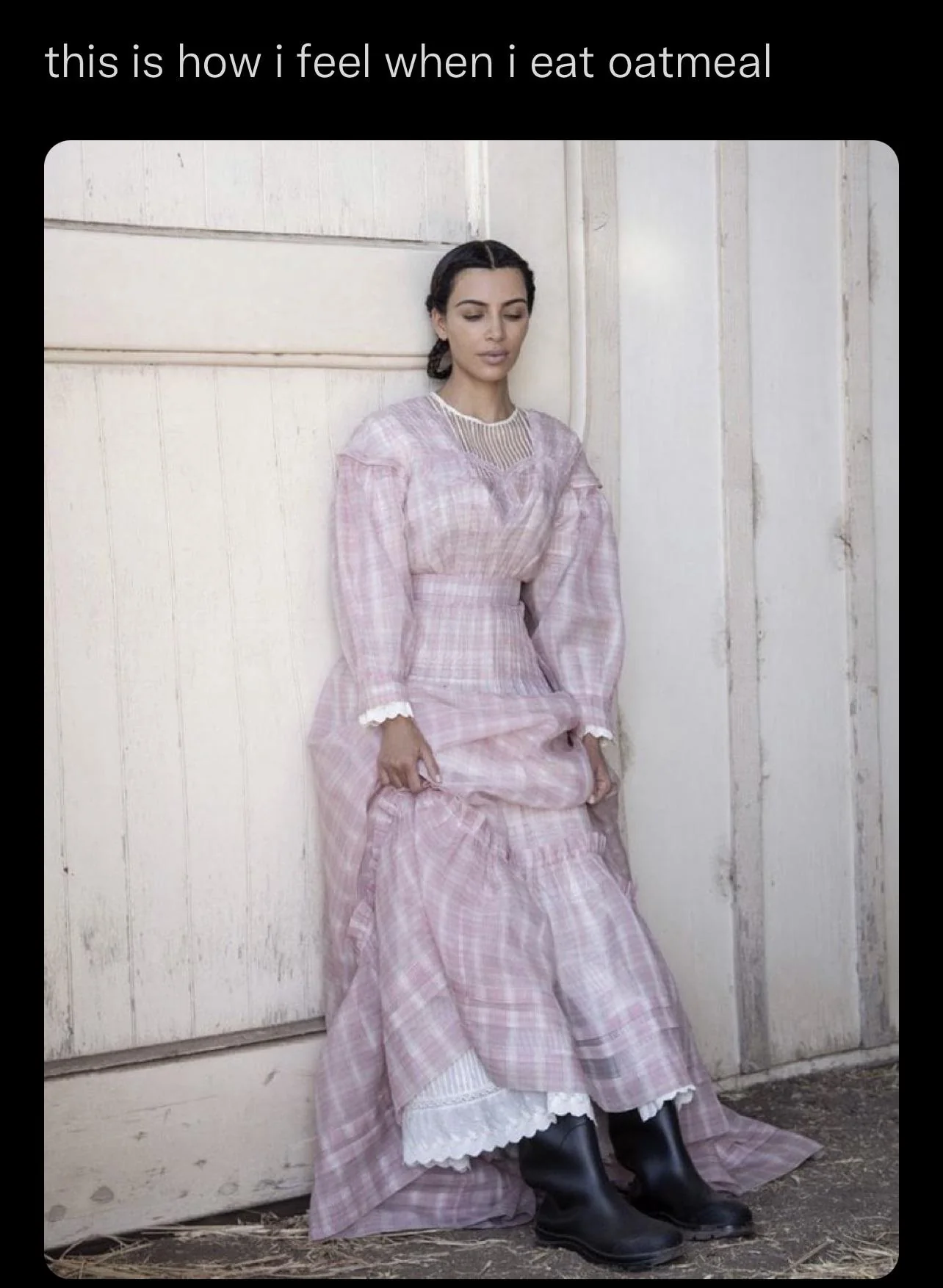
Today, you can compare your body to a supermodel in LA, your career to a 22-year-old nepo baby in London and your relationship status to strangers’ marriage announcements. And you’ve seen this all before you’ve even got out of bed. My point is that it would be hard to feel bad about yourself or your life if most of the people around you were living under similar circumstances.
While life online has its perks, it has opened us up to almost unlimited psychological stimulation. Between algorithms, notifications and being constantly connected, it can feel as if our brains also have a million tabs open at once. You can’t simply clock out from work anymore, with emails and Microsoft Teams always keeping us within reach of our employers. Studies have shown that a single notification can disrupt our focus for roughly seven seconds, and that builds up fast. It seems like boredom, silence and undivided attention have become a luxury not many of us can afford.
Historically, you could’ve spent the afternoon peeling spuds without listening to music at the same time, or doing the laundry without a podcast on in the background. These activities aren’t exactly the most stimulating, but at least you were solely focused on the task in front of you. We’ve practically eliminated boredom from our lives. But we’re not necessarily happier.
Of course, let’s not be naive here. Modern life has brought us some life-saving and time-saving advances, like antibiotics, anaesthetic, safer childbirth and refrigeration. I can say for sure I don’t want to be transported back to the olden days. But comfort doesn’t always correlate with happiness.
Right now, we have the most advanced technology at our fingertips. We are more entertained and connected than any generation before us. Yet that doesn’t necessarily seem to be making us any happier. If material progress doesn’t correlate with happiness, what is modern life lacking?
The 2026 World Happiness Report found that young people in Western Europe and North America are significantly less happy than they were 15 years ago. Maybe our parents were right and it really is ‘that phone’ causing us problems. But of course, blaming everything on our phones is just too vague when young people are also craving belonging, trust, and face-to-face social connection.
Maybe what we’re nostalgic for is the sense of community we’re missing in modern times. Studies found that 19% of young adults globally said they had nobody they could count on for social support in 2023. This is a 39% increase from 2006. As privileged as we are now, it seems that when my parents were my age, they knew all their neighbours, spent hours in people’s houses just to ‘call in’, and had drinks for half of what they cost now in their local pub, where the whole town could be found.
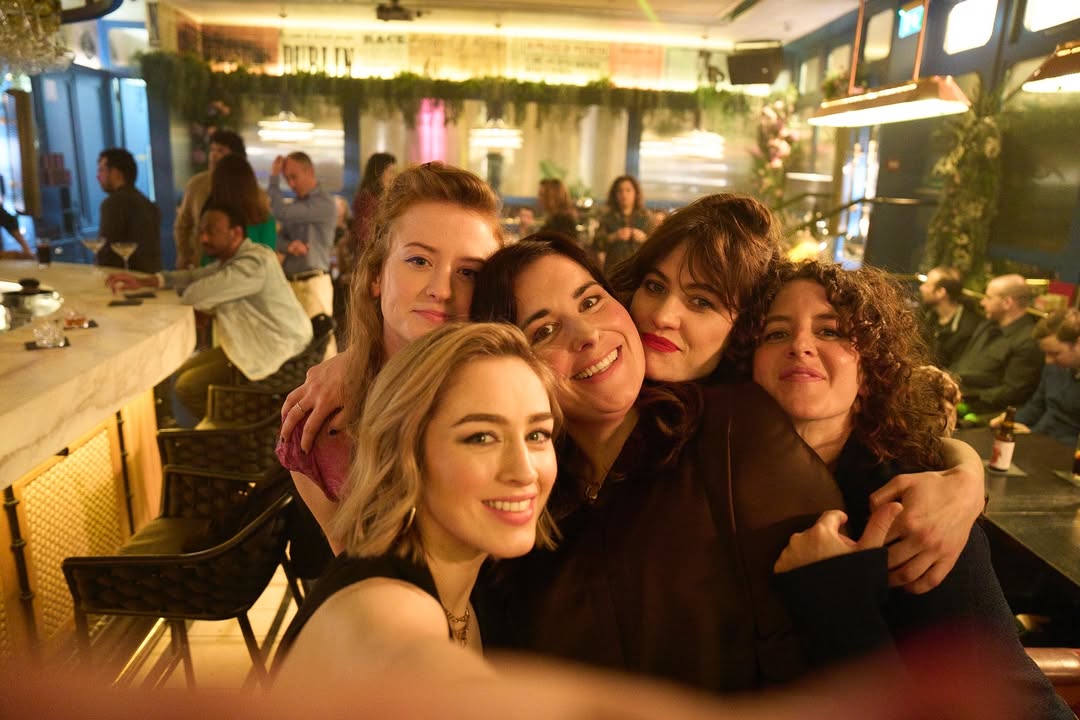
via RTE
Of course, this isn’t all great. I mean, you know how nosy Irish people are. I’m sure that everyone annoyingly knew everyone else’s business. But at the same time, people knew you existed. Living in Dublin today, sometimes I felt like a ghost. Day to day, nobody really knew me, and when I left, I’m sure nobody felt my absence. My independence and freedom increased, but my dependence on others dwindled too. Maybe the thing I’m jealous of isn’t Longford in 1985. Maybe it’s the idea of walking down the street or into the local pub and knowing half the people you pass.
It can be so easy to find yourself trapped in loneliness these days, especially when you can leave the house, go to the shop and not speak to a single person thanks to the trusty self-checkout. Studies have shown that social connection is as vital to human health and survival as food, water, and shelter. See, Mam? The earth-shattering hangover was good for my health if it got me out of the house.
These days, I find a certain coldness in the air when I walk through Dublin city centre. You can walk past hundreds or thousands of people every day without speaking to a single person. And sometimes that feels lonelier than just being alone. CSO data found that 15% of those aged 16–24 felt lonely at least some of the time in 2024.
But we all know that nostalgia is a liar too. It’s easier to remember the community we lost while conveniently forgetting everything else. My parents think of the 1980s and remember friendships, discos and youth. They’re probably less nostalgic for the economic hardship, emigration and restrictive social attitudes of that time.
When we fantasise about olden times, we’re quicker to picture baking bread, berry picking and firesides than to picture limited human rights, poverty and physical labour. I don’t think young people are longing to be back in a particular historical period, but rather for the human connections and experiences that were naturally built into daily life. These things take more effort than we’re willing to admit nowadays.
There are so many ways to look at it. Honestly, I don’t even think I would’ve survived my grandparents’ generation. They walked to school barefoot, got a beating for getting their homework wrong, and then had to wait a week before they could have a bath.
What do we actually want from the past? Probably not outdoor toilets, twelve pregnancies or marrying your second cousin, the village hottie. But there are definitely days where I feel my ancestral roots call my name. I yearn for a community that feels natural, slower communication and fewer opportunities to compare myself to strangers on the other side of the world.
Maybe the ideal life is stealing the best parts of the past and present: keeping the healthcare, central heating and women’s rights, while rebuilding the community and slowness we’ve lost. Maybe my parents were right, and all along peak life really was Longford in the 1980s.
Words by Katie Walsh

 100vw, 1707px" />)
 100vw, 681px" />)
 100vw, 792px" />)
 100vw, 1706px" />)
 100vw, 1600px" />)