Trending 27th April 2026 by Stellar Magazine
Why The Testaments Feels So Timely Right Now
The show feels less like a dystopia and more like a warning
via Disney+
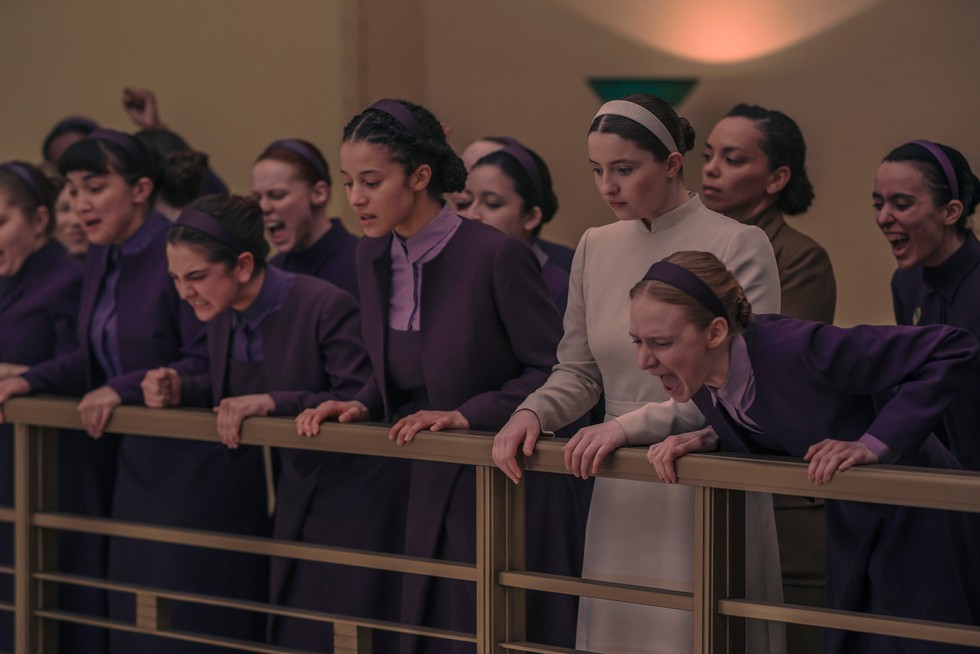
Gilead is back on our screens in The Testaments, the new spin-off series from The Handmaid’s Tale. This time it’s not just about surviving oppression as a woman, but growing up within this system as a young girl. This is what makes The Testaments so unsettling. It shows us how control is normalised and maintained from childhood. Through clothing, language, and religion, Gilead conditions girls to become wives.
Based on Margaret Atwood’s sequel novel, The Testaments is set in the same universe as The Handmaid’s Tale. You don’t need to watch The Handmaid’s Tale in order to understand The Testaments, which is great for those of us who are only just discovering Gilead. The show centres on two characters, Agnes and Daisy. These two girls live very different lives but eventually cross paths at Aunt Lydia’s Premarital Preparatory Academy. The show is connected to The Handmaid’s Tale through the use of returning characters like Aunt Lydia and June. But unlike The Handmaid’s Tale, this series looks at what happens when a girl is raised under oppression and authoritarian rule, rather than the shock of learning how to survive in it.
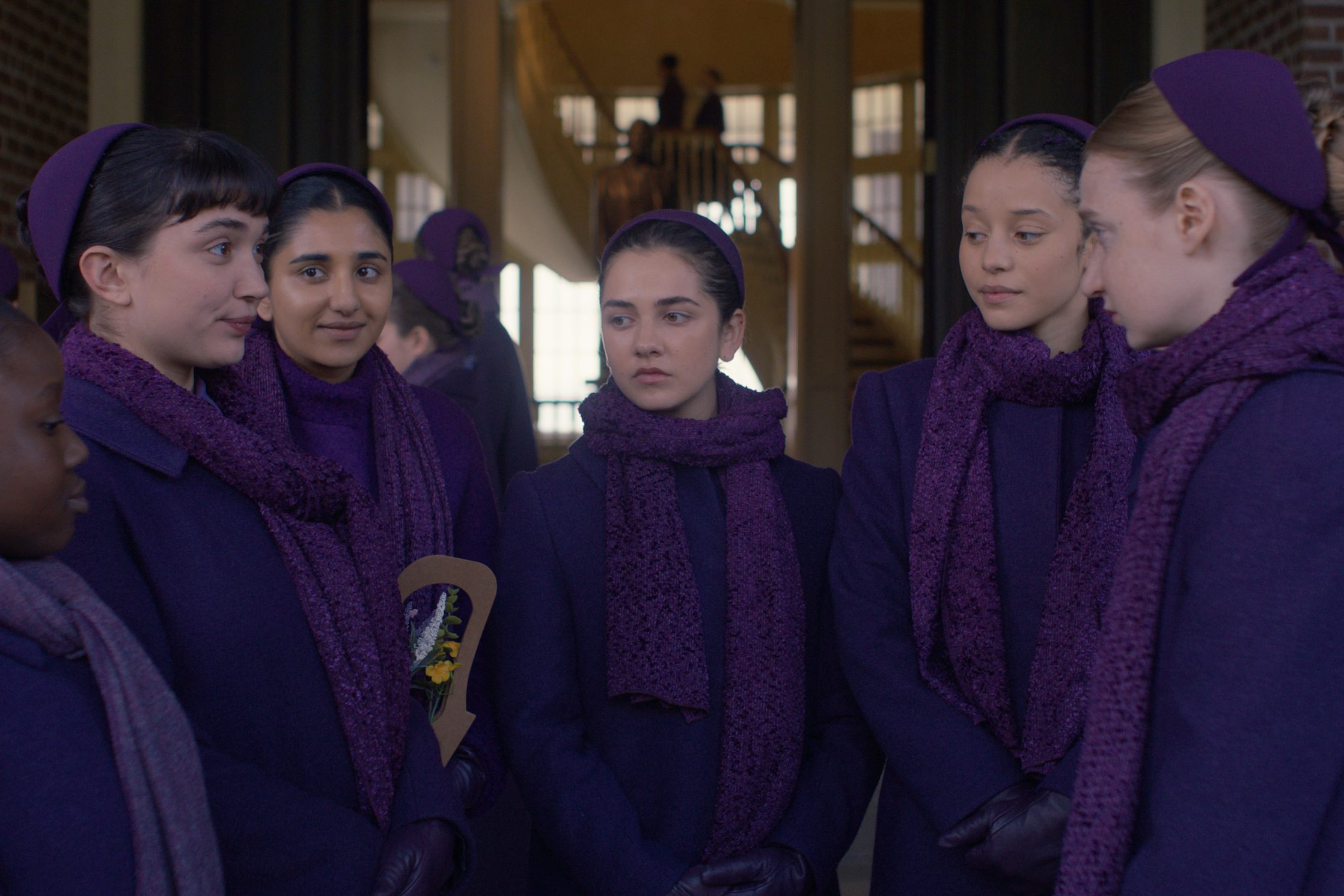
In The Testaments, control begins in girlhood. This is done by having girls wear colour-coordinated uniforms based on their stage in puberty. Girls who get their first period wear a green pin to showcase their fertility and “worth in the eyes of God.” The girls are protected from the outside world, with curtains covering the windows as their bus passes the bodies of hanged men on field trips.
The academy’s focus on home economics and religion rather than maths and science showcases how obedience is key to the girls’ development in Gilead. A girl’s worth is determined by her fertility, with rituals taking place once she gets her period. Menstruation is a public celebration. What soon follows is the prospect of being married off by her family to a strange man. In Gilead, girlhood is not a time of self-discovery, but a process of preparation for submission. There is no room to simply be a young girl in this universe.
via Disney+
In The Testaments, the female body is used as a means of control and intimidation. When a man is caught in the act of assaulting a girl and is punished for his crimes, the girls are constantly reminded that they are not blameless. They will meet the same fate if caught “tempting” a man. The logic feels ancient, but also hauntingly familiar. Women are also heavily punished for speaking freely, as the main characters are forced to literally brush their teeth with soap and live under the constant threat of having their tongues cut out for daring to speak their minds.
The way the series handles puberty is particularly disturbing, with a girl’s first period being a public announcement that changes her life overnight. The show keeps returning to the idea that the female body is there to be watched, disciplined, and claimed. Misogyny is dramatised through ritual and routine in the academy, preparing the girls to enter a male-dominated system where the only status available to them is that of being a wife.
Again and again, The Testaments uses religion as a means of fear and control among the girls. God is invoked constantly, but never in a way that is comforting. Instead, God is used as a threat. Agnes almost drowning in a baptismal-like ceremony once she begins her period feels like a symbol of the suffocation of her innocence. What stands out to me is how Gilead doesn’t admit to its own cruelty. It presents itself as holy and morally correct. God is used as a tool for enforcing obedience, rather than a guide for moral behaviour.
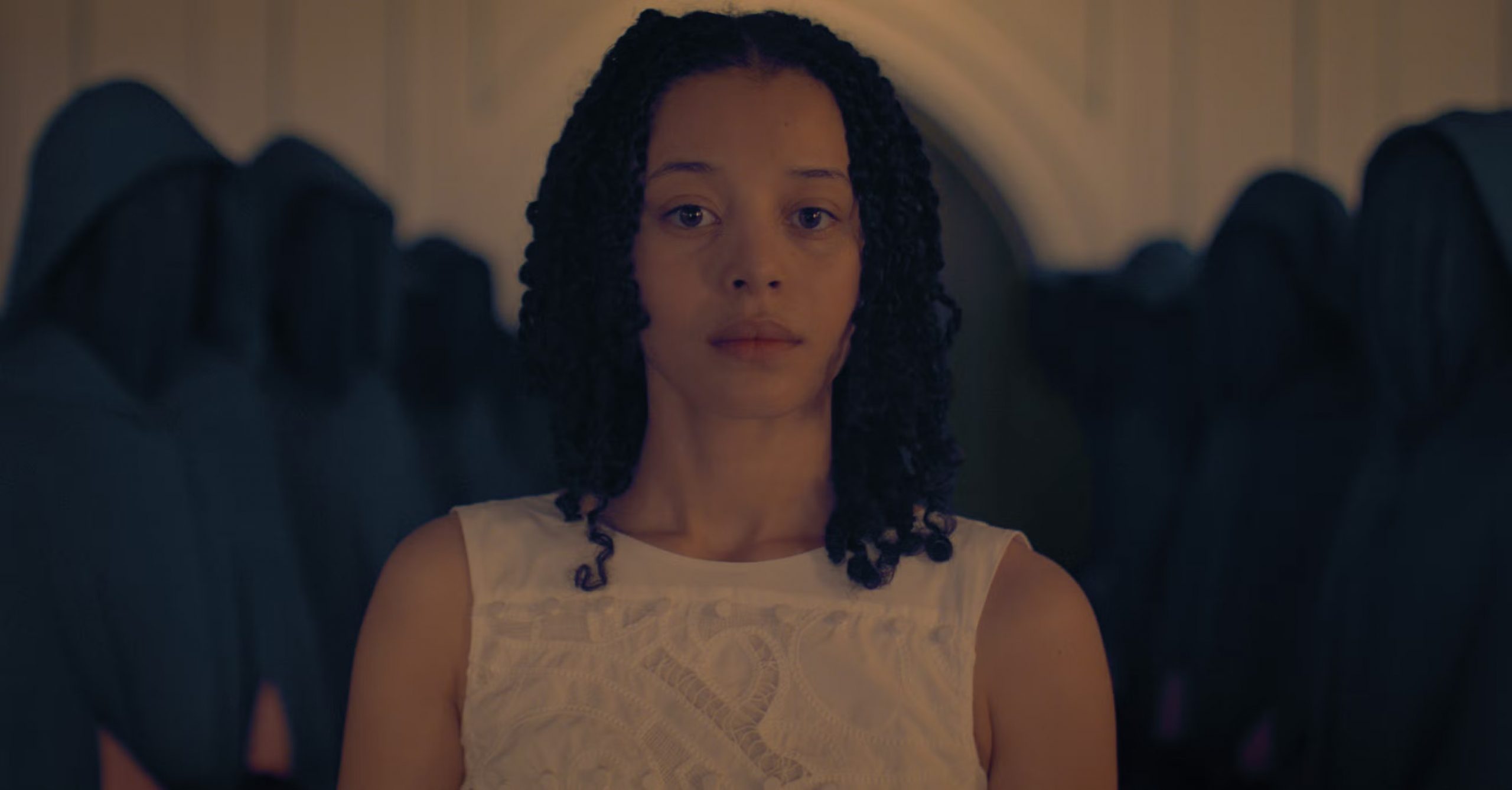
Agnes and Daisy serve as a contrast between two different versions of girlhood. Agnes is raised to accept Gilead’s rules from childhood, even when it hurts her. On the other hand, Daisy comes from Toronto with memories of music, phones, romance, and the small freedoms of ordinary life. While Agnes is trying to make sense of her life within the regime, Daisy is suddenly thrown from a life of freedom into one of restriction. Placed side by side, their lives show just how unnatural life in Gilead is for a young girl. Daisy becomes a catalyst for Agnes, helping to free her from the prison-like mentality she has grown up in.
via Disney+
Gilead pushes a feminine aesthetic in order to sell an idealised version of wifehood to these young girls. Visually, the mansions where the commanders’ wives live have a dollhouse-like quality, helping to keep the lie of Gilead alive. It presents being the perfect wife as the only visible aspiration for young girls in Gilead. This is heavily contrasted with the sheer violence Gilead perpetrates against its citizens. The academy is designed to make submission look elegant and safe.
The Testaments is a terrifying reflection of what is possible for women. We regularly see more policing of women’s bodies, victims blamed for the crimes committed against them, and the shrinking of our reproductive rights in the news. The Testaments feels so timely now, especially after witnessing the rollback of abortion rights in the USA. The show reminds us that women’s rights are never guaranteed and can be stripped back overnight, exposing just how fragile our place in society can be.
In the show, it is revealed that Gilead wasn’t always there, but the politicians spoke in a way that implied women and other minorities were less worthy, and yet these men were still elected. This reminds me of the reactionary politics embraced by Donald Trump in the USA. Despite making many disturbing comments about women and minorities, he was still elected. It reflects something deeply uncomfortable about our society: it is not as safe for women as we like to believe. Life in Gilead also reminds me of the highly aestheticised versions of female domesticity sold as aspirational on TikTok over the last year, particularly in the rise of creators like Nara Smith. The show feels less like a dystopia and more like a Black Mirror-style warning.
It would be a challenge to make The Testaments feel fresh. Audiences loved The Handmaid’s Tale, so there were big shoes to fill. But we don’t revisit Gilead for its nostalgia. The series shifts our perspective, showing the horrors of Gilead from a completely new angle. We saw women fight for survival in The Handmaid’s Tale, but the girls here inherit the indoctrination and are raised by it. The show demonstrates just how frightening authoritarian systems can be. They do not simply appear overnight; they are built over time and passed on until they become the norm. It survives by teaching the next generation that this system protects women. However, all it really does is maintain control and push women into a life of submission. Gilead shows us just how easily freedom can be lost and disguised as order.
Words by Katie Walsh

 100vw, 1058px" />)
 100vw, 2560px" />)
 100vw, 1186px" />)
 100vw, 1184px" />)
 100vw, 2560px" />)