Trending 16th June 2026 by Stellar Magazine
Have Celebrity Destination Weddings Officially Become Too Much?
When the wedding venue is a UNESCO World Heritage site, we might be doing too much.
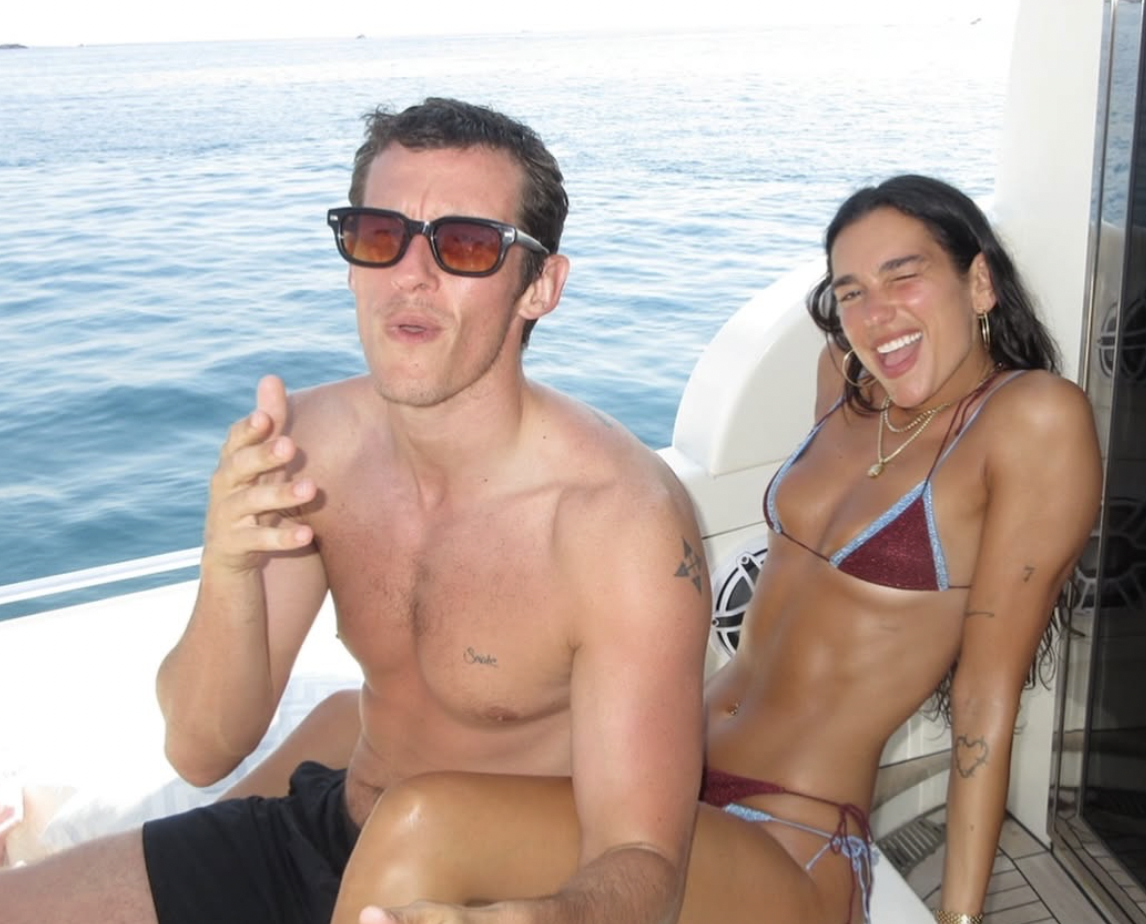
via @dualipa / Instagram
Celebrity destination weddings used to be the stuff of fantasy. A private villa, legendary designer gowns, an all-star guest list and enough outrageous gifts to make you wonder what exactly you buy someone who already owns everything.
It was aspirational, in the way most celebrity things are. You looked at the pictures, said “must be nice”, and moved on with your day. But lately, the mood has shifted.
Dua Lipa and Callum Turner’s reported wedding celebrations in Palermo have become the latest example of a celebrity wedding that looked beautiful from the outside, but slightly less charming for the people actually living there.
According to reports, the couple’s three-day celebration involved closed-off squares, heavy security and backlash from locals, with posters appearing around the city saying: “Palermo is not for rent.”
And honestly, that line sums up the whole issue.
View this post on Instagram
Because there is a difference between choosing a beautiful city for your wedding and making parts of that city feel like a private living room for the rich.
Dua and Callum are reportedly in talks to give something back to Palermo after the criticism, which is obviously better than nothing. But it still raises the question of why the gesture has to come after locals are already annoyed.
This is not really just about Dua either. She is just the latest famous name attached to a much bigger conversation about celebrities, billionaires and ultra-wealthy couples turning historic places into personal backdrops.
Jeff Bezos and Lauren Sánchez’s Venice wedding attracted huge media attention and backlash in 2025, with protestors accusing the former wealthiest person in the world of treating their city as their own playground. The region is already suffering heavily from over-tourism, rising costs and locals being forced to relocate.
So, when a fleet of the richest people on earth visit and start taking over parts of the city for a wedding, it is not exactly shocking that people have feelings about it.
View this post on Instagram
As well as Dua and Callum, Kourtney Kardashian and Travis Barker were another Italian wedding that took place earlier in 2022 in Portofino, only adding to the idea that certain places are becoming less like actual town and more like rentable celebrity sets.
View this post on Instagram
Of course this is nothing new, George and Amal Clooney had Venice. Kim Kardashian and Kanye West had Florence. The destination wedding has been a staple of the rich and famous for years.
But in 2026, it feels different. People are more aware of over-tourism, climate concerns, housing pressure and the way public spaces are increasingly being carved up for people who can pay enough.
View this post on Instagram
And then there is Ming Xi and Mario Ho, whose wedding might be the most obvious example of this whole thing going too far.
The Chinese super model and billionaire heir held their wedding at Mont Saint Michel Abbey in France, the first wedding there in over 1,000 year.
Planning apparently took a year, with thousands of flowers, luxury fashion and a level of access that most people could not even begin to imagine.
Was it beautiful? Obviously. Was it also a bit absurd? Also, yes.
View this post on Instagram
There is something uncomfortable about watching historic spaces, places that belong to culture, memory and the public imagination, become one-off luxury venues for people with enough money and connections. At some point, it stops feeling like romance and starts feeling like access as a personality trait.
Nobody is saying celebrities have to get married in a community hall with sausage rolls and a DJ called Declan. But there is a point where “dream wedding” starts to look a lot like disruption, privilege and public space being temporarily turned into someone else’s fantasy.
Maybe the destination wedding is not dead. But the era of people looking at these wildly lavish celebrations and simply calling them goals might be.
Because if your wedding needs police barriers, displaced locals and a statement afterwards about giving something back, maybe the fairytale has slightly lost the plot.
Words by Andrew Connolly

 100vw, 1186px" />)
 100vw, 1638px" />)
 100vw, 1186px" />)
 100vw, 1852px" />)
 100vw, 1184px" />)