Trending 29th June 2026 by Stellar Magazine
Why Are Adults Obsessed With Trinkets Again?
Maybe because we can't afford anything else.
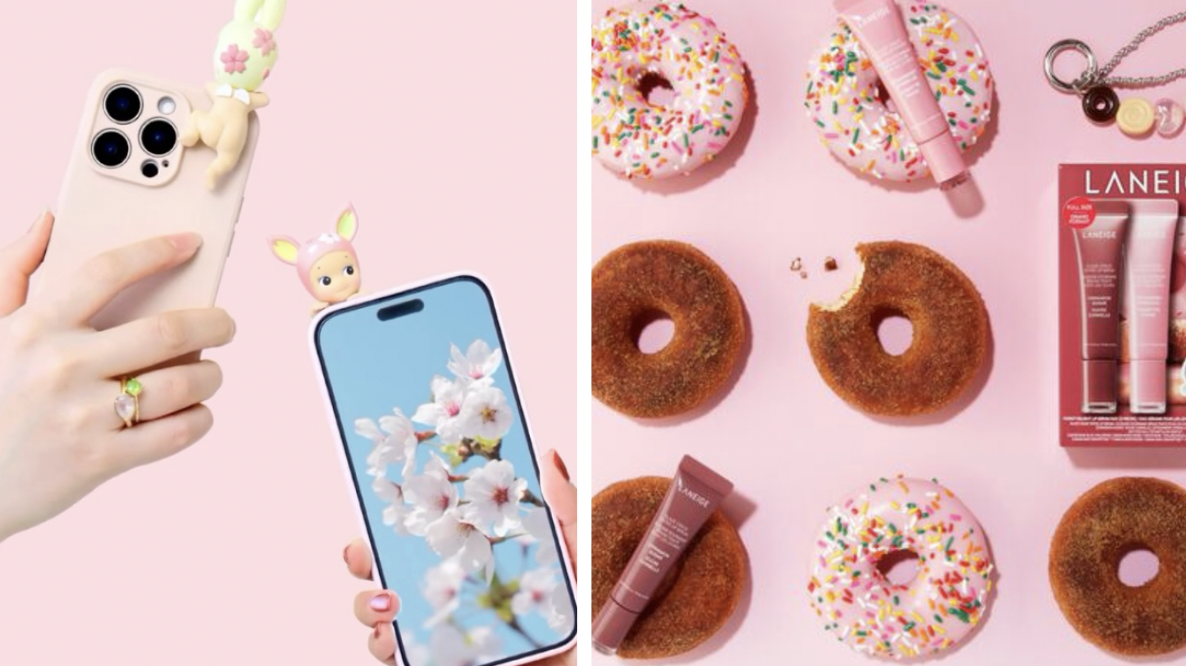
When my mam was 23, she was walking down the aisle, marrying my father and beginning to make a home with him, where they would later have two children. At 23, I am treating myself to a ceramic fairy figure, a new Hello Kitty keychain or a tiny Sylvanian Families critter because I will probably never be able to buy a home in this country.
I know I’m not the only one. Maybe it’s not a ceramic fairy for you. Maybe it’s the smaller treats. An €11 lip gloss, a €6 matcha, a bag charm, a Sonny Angel, a Labubu, or some tiny object that serves no real purpose other than making you feel briefly delighted. Planning a large purchase feels almost impossible these days, so we decorate our lives with smaller ones instead.
Over the past few years, the word “trinket” seems to have taken on a life of its own online. Suddenly, adults are proudly collecting tiny figurines, keychains, nostalgic toys and objects that look like they belong on the bedroom shelf of a child from the early 2000s. On the surface, it might look like another silly internet trend. But maybe our obsession with trinkets says more about modern adulthood than we realise.
The trinket trend appears to be driven by Gen Z’s desire for comfort, nostalgia and highly personal self-expression. In 2025, we saw Labubus dangling from handbags and Sonny Angels clinging to iPhones everywhere we looked. These small creatures are seen as an affordable dopamine hit in a world where young people aren’t sure where their futures will lead.
But in an era of “sweet treats” and “little trinket” purchases, could this trend be linked to something slightly more sinister? I don’t think young people are buying these things because they’re irresponsible, but because small purchases feel achievable when large ones do not.
@sylvanians.stories #sylvanianfamilies #calicocritters #drama #story #fyp ♬ TEXAS HOLD ‘EM – Beyoncé
This brings me to the “lipstick effect,” a theory suggesting that during periods of financial uncertainty or recession, people continue to purchase small, affordable luxuries rather than making major purchases. These small purchases provide emotional comfort and a sense of normalcy when our budgets are tight.
The term “lipstick effect” was coined in 2001 after Estée Lauder chairman Leonard Lauder noticed a spike in lipstick sales during an economic downturn.
The idea now extends far beyond lipstick, encompassing premium coffee, boutique Pilates classes, gourmet snacks and other small luxuries that have become increasingly normalised. Yet even as these smaller luxuries become normalised, 55% of Gen Z say their financial situation is causing them to delay major life decisions.
Maybe young people’s appetite for cute trinkets and the growing interest in “healing your inner child” partly comes from feeling financially unprepared to start families of their own. For many young people, this is not a sign of immaturity, but a response to the fact that parenthood, home ownership and long-term stability feel increasingly out of reach. Studies have shown that in Ireland, 62% of Gen Z’s and 49% of Millennials cannot afford to buy their own home.
The housing crisis also affects young people’s career progression, as many workers say that housing availability directly influences where they can work. As someone from Longford, I understand this struggle deeply. I had to move to Dublin to find work outside retail and, as a result, I now pay extortionate rent.
This comes at a cost to young people’s mental health, as long-term financial insecurity remains the number one source of chronic anxiety, with 46% of Gen Z’s reporting feeling stressed all or most of the time.
View this post on Instagram
The median homebuyer age in Ireland is now 40, and the rate of fertility is 1.5, which is below replacement level.
When the median homebuyer is 40, it points to a serious delay in young people’s ability to build wealth. In 2010, the median age of an Irish homebuyer was 35. With the median age pushed back by 5 years, this means a huge portion of a person’s working life is spent trapped paying high rent rather than purchasing their own home.
So I guess you could say things are a tad unstable right now for young people. So maybe buying your sweet treat or cute trinket isn’t the issue. If collecting objects that remind you of your childhood brings you comfort in this chaotic world, then please, knock yourself out, girl. None of this has anything to do with the objects themselves, but the feelings attached to them.
But we should also ask whether the companies behind these products know exactly what they are doing. Are we being sold a pacifying kind of comfort?
Unboxing videos, hauls and collection displays have turned trinkets into a form of social currency online, fuelling consumers’ desire to participate. The creators of products such as the infamous “Labubus” found that in 2025 their revenue surged to $5.4 billion. Research also suggests that adults are helping to drive the collectables market.
As comforting as these cute trinkets and nostalgic toys can be, there is something slightly disturbing about being sold wearable pieces of childhood nostalgia by companies that know exactly how exhausted young people are.
Nonetheless, trinkets and cute collectables are not the real problem. The obsession isn’t just about immaturity, but a generation attempting to recreate a feeling of joy and softness in a world where the future is increasingly uncertain for young people. When the big milestones feel impossible, perhaps it makes sense that we find comfort in tiny things.
Words by Katie Walsh

 100vw, 1242px" />)
 100vw, 1186px" />)
 100vw, 1920px" />)
 100vw, 1062px" />)
 100vw, 1186px" />)