Trending 11th March 2026 by Stellar Magazine
How Hello Kitty Has Stood The Test Of Time
The Japanese mascot has been stealing the hearts of adults and children alike
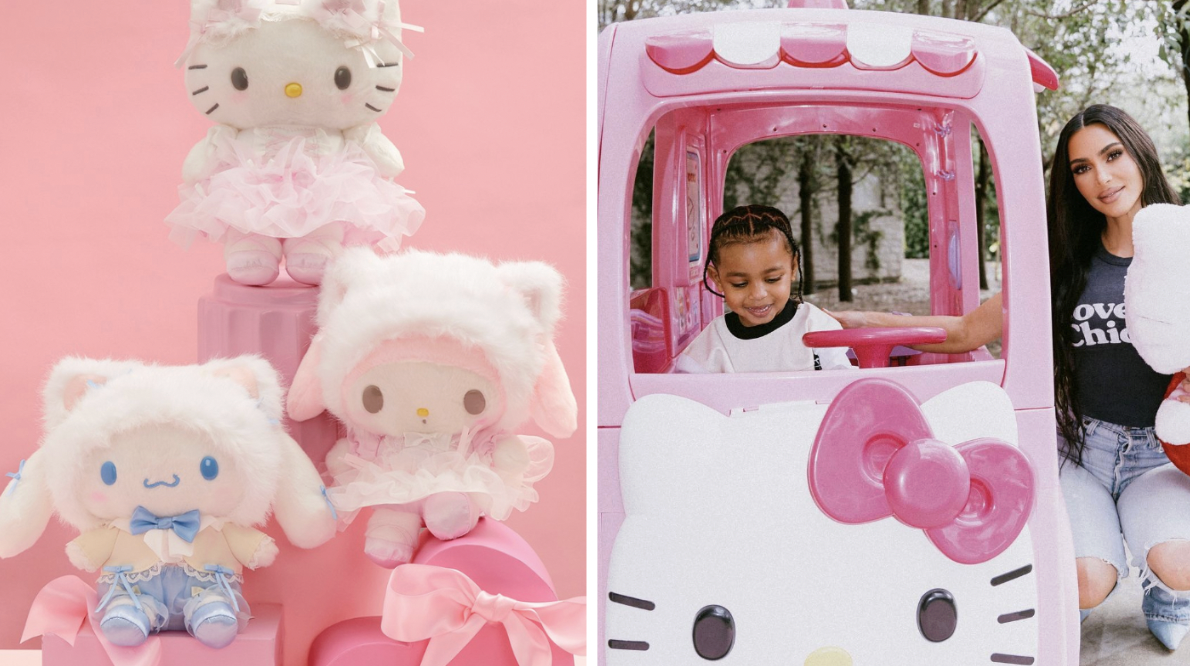
via Sanrio / @kimkardashian
A cat that weighs 3 apples and is 5 apples tall: this mouthless kitty has made a huge cultural impact, building an $80 billion empire and becoming one of the most successful franchises ever. Since childhood, I have loved Hello Kitty, and she was everywhere you looked. Clothes, beauty products, plush toys, games, jewellery: there didn’t seem to be a market that she couldn’t reach. She is much more than a kid’s character, but a cultural symbol.
With Hello Kitty’s 50th anniversary being in 2024, it’s hard not to notice how she defies trend cycles by staying relevant for so many years. Since her debut more than 50 years ago, she’s become a UNICEF ambassador, a special envoy for Japan’s Foreign Ministry and the subject of themed restaurants, cafes, two amusement parks and even a maternity hospital. Hello Kitty’s scale comes down to her longevity. Her blank canvas makes it easy for people to project themselves onto her.
What makes Hello Kitty so timeless is explained by Yamaguchi, one of Sanrio’s illustrators, “She’s good at sports, and she looks cute and chic too,” she explained. “I think of her as a blank canvas that you can transform into all sorts of things. There’s not much that doesn’t suit her… I think that when everyone talks to Hello Kitty, she probably answers them in some way.” Her blank expression makes her malleable enough to fit almost any brand or aesthetic, a marketer’s dream.
View this post on Instagram
One of the main contributors of Hello Kitty’s success is her distinctive appearance: without a mouth to display emotions, fans can connect their emotions through her. The design was put together to embody the Japanese concept of “kawaii,” which loosely translates to “cuteness” in English. It’s a cultural phenomenon that celebrates all things adorable.
Hello Kitty was first designed in 1974 by Yuko Shimizu, one of Sanrio’s illustrators. Yuko’s design was based off of a kitten she was gifted by her father and from there, Hello Kitty made her debut to the world. This simple design, of a mouthless face, yellow nose, whiskers and a bow, made her one of the most memorable cultural icons. Hello Kitty first appeared on a line of vinyl coin purses. From there, Hello Kitty was proven to be Sanrio’s most popular design as sales soared once her face was plastered on toys, stationery and other products.
Hello Kitty’s sales continued to grow and evolve during the 1980s and 90s in Japan, however, Yamaguchi knew that Hello Kitty needed to evolve with her audience. Yamaguchi received a letter from a concerned Hello Kitty fan in 1987, who loved Hello Kitty, however she was told by her friends and family to grow out of it as it’s a children’s character, but she didn’t want to, so she requested that there should be Hello Kitty products made for teenagers.
Yamaguchi was heavily inspired by fashion trends she saw in Tokyo’s Harajuku fashion district, so she began to incorporate this inspiration into her Hello Kitty designs in order to appeal to older fans. By the late 90s, Hello Kitty would be the face of 12,000 new product lines a year, through endless categories. She was featured on items from clothing, to board games, cutlery, electronics and kitchen appliances. The company’s decision to branch out and feature Hello Kitty on these “boring” adult products proved to be a major selling point, as it was clear the nostalgia of Hello Kitty and its girlyness was a factor many grown women wanted to incorporate into their homes.
View this post on Instagram
We saw Hello Kitty go global in the 1990s, as Japan’s economy became stagnant, Sanrio decided to expand the company’s presence internationally. At this time, there was an explosion of Western interest in Japanese culture, from Tamagotchis to Dragon Ball Z, so Hello Kitty fit perfectly into the Western market, particularly for American consumers. Then the 2000s turned Hello Kitty into the face of books, video games, an animated TV series, and plenty of deals with luxury brands such as Swarovski.
Nostalgia seems to be Hello Kitty’s driving force, both in Japan and the rest of the world. This resurgence of Hello Kitty has been attributed to the idea that the first generation to see Hello Kitty have now become parents and have been able to pass their interests down through their children, according to Atsuo Nakayama, a Japanese sociologist specializing in the entertainment industry. Hello Kitty’s nostalgia allows for her fans to be captivated by her and want to collect it again. Now that we’re grown-ups with jobs, that nostalgia is a marketing dream.
Hello Kitty is kept culturally relevant through Sanrio’s marketing strategy, which is largely based on partnerships with other major brands such as Starbucks and Crocs. These constant collaborations keep her current without the need for a “reboot.” This makes Hello Kitty permanently feel “new” despite being around for over 50 years.
Another contributor to Hello Kitty’s success is her presence in the fashion industry. She has collaborations with luxury labels like Balenciaga, as well as athletic ones like Nike. She has also appeared on the runway for New York and London Fashion Week, proving to be a feature of girlier styles and street style. Hello Kitty is also a favourite among celebrities such as Dua Lipa, Kim Kardashian, North West and Saweetie.
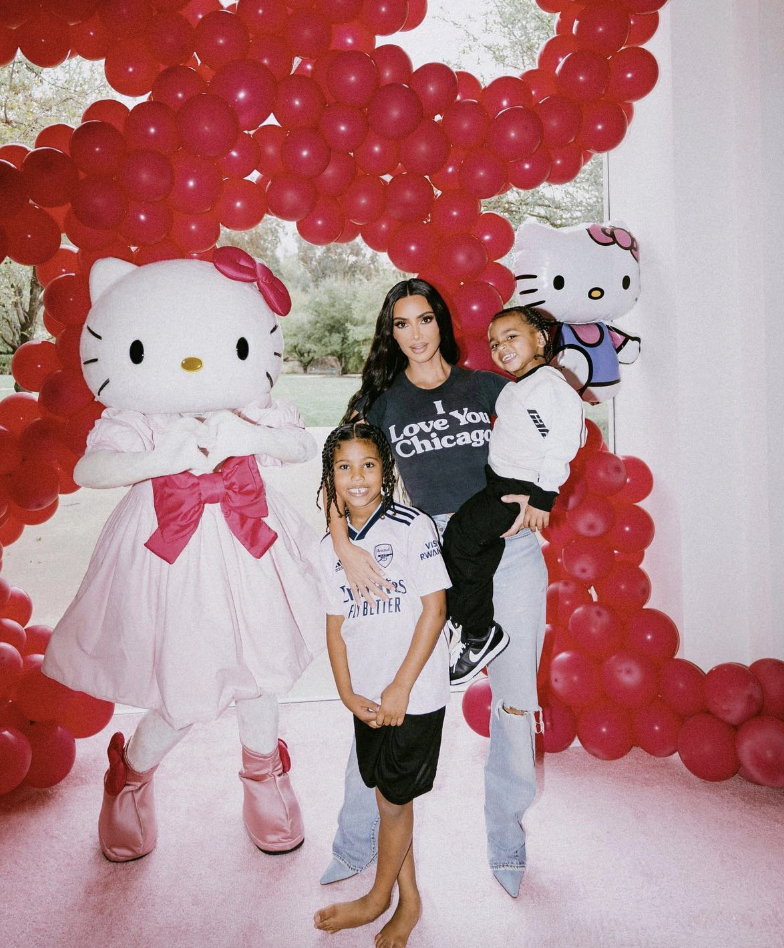
via @kimkardashian
She’s a staple in the fashion world, but also the beauty world. It’s not just theory, you can see it in the stuff we actually buy. Search Hello Kitty beauty products and you will find endless results and products at various price points. My personal favourites are some Zara Hello Kitty perfumes I bought from the kid’s section (sorry kids); I’ve nearly used them up. They smell sweet and I always get compliments when I wear them, but the best part is the packaging: the bottles are shaped like Hello Kitty’s head and they’re still affordable. The funny thing is, they were a gift for my 21st birthday, proof that Hello Kitty is definitely not just for younger girls, but for life. From runway to lip balm, she suits anything.
Hello Kitty keeps things cutesy as we get older without losing the fun. I love incorporating her into my looks in subtle ways, like bag charms and nail designs. She embodies femininity playfully without looking childish. It reclaims a softness that we grew up with: playing with Barbies, Sylvanians and Nintendogs on a pink DS, but in a form that feels socially acceptable in adulthood.
Recently I’ve seen so many girls, whether online or real life, sporting Hello Kitty, especially in more subtle ways. Hello Kitty stationery at the office, Hello Kitty nails, bag charms, stickers on the phone case or even a piercing with her face. I love this resurgence of Hello Kitty personally, it keeps adulthood fun and lively while reminiscing on our own childhoods and displaying a cutesy personality. I have even seen women on TikTok showing off their daughters’ bedrooms, decked out in Hello Kitty merchandise, showing just how Hello Kitty serves as a generational comfort character, one that can be passed down through generations.
While writing this, I kept asking myself: am I a victim of consumerism, a helpless slave to good marketing? Research suggests customers who feel emotionally connected to a product are 52% more committed to a brand than customers who are satisfied with its value. Sanrio proves how emotional connection can outperform product utility. Culture and commerce hold hands here, and that partnership is how Hello Kitty stays relevant.
Hello Kitty is the marketer’s dream, with her licensing and ever-adaptable self, she can be transformed to suit any aesthetic, lifestyle or age. Through emotional comfort and aiding in the development of any aesthetic identity, she may be here to stay for a lot longer than 50 years, continuing to pop up on any sort of product we can think of. Hello Kitty is not just back in style, she never left.
Words by Katie Walsh

 100vw, 978px" />)
 100vw, 1164px" />)
 100vw, 714px" />)
 100vw, 1096px" />)
 100vw, 1182px" />)